
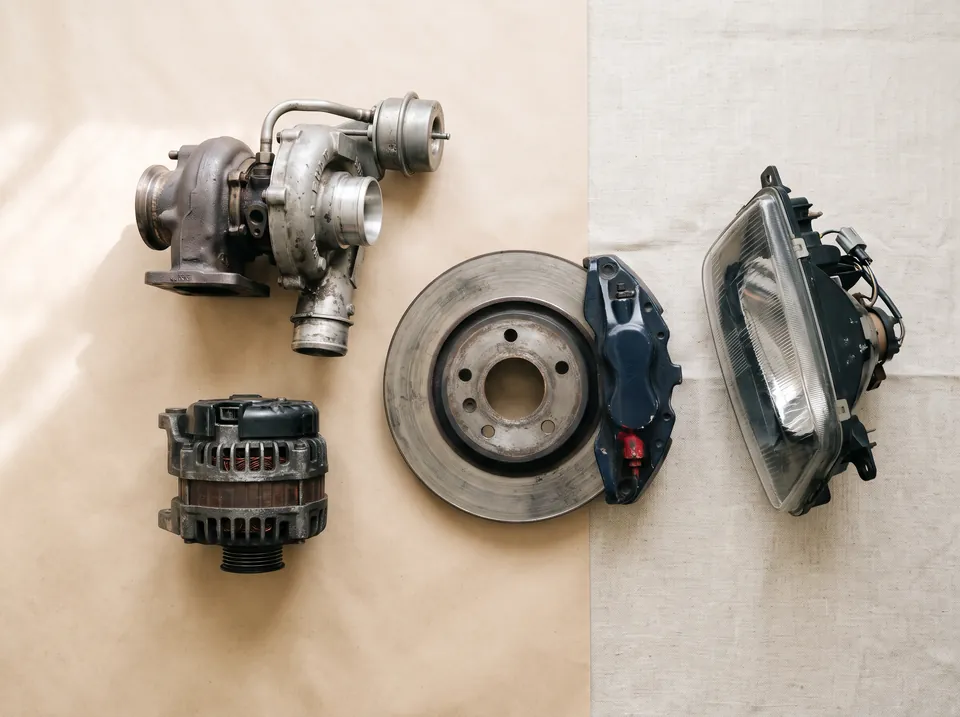
Where to Buy Used Auto Parts from Japan
Used auto parts from Japan are bought directly from verified Japanese exporters on a sourcing marketplace such as Japan Convoy: search or post a buyer request for the part by number or vehicle fitment, contact a seller to confirm the part's condition grade and photos, then agree price and terms directly with them. Once a deal is agreed, you can optionally ask Japan Convoy to broker inspection, packaging, customs paperwork and shipping coordination for that order.
What Are Used Car Parts from Japan?
Used car parts from Japan - also called second-hand Japanese car parts - are components removed from vehicles taken off the road in Japan, then cleaned, function-tested where applicable, graded for condition and exported worldwide as OEM, aftermarket or recycled stock.
Japan's supply of second-hand parts comes from vehicles retired after an accident, a trade-in, or simply because the country's Shaken inspection makes an older car expensive to keep registered. Dismantlers recover the parts, test what can be tested, and grade each unit's condition before it's listed. They're sold individually by part number, as a half cut or nose cut covering several matched components at once, or in bulk by the pallet or container, and are priced against the condition of that specific unit rather than a uniform factory spec.
Why Buy Used Parts from Japan
Japan is a global hub for automotive parts. Because the Shaken system pushes owners to replace cars while they're still mechanically sound rather than repair them indefinitely, a steady supply of comparatively low-mileage, well-maintained vehicles gets dismantled for parts each year - the same dynamic that makes whole Japanese used cars attractive to importers. That supply, combined with Japan's manufacturing base for OEM and performance brands, is why used, OEM and aftermarket Japanese parts ship to buyers worldwide.
Types of Parts: Half Cuts, Nose Cuts, Engines, Body & Electrical
Used parts are sold two different ways: by cut format, and by part category.
By Cut Format
- Half cut: the front half of a donor vehicle - engine, transmission, wiring harness, dashboard and front suspension - cut away as one matched unit.
- Nose cut / front clip: a smaller cut of just the nose - bumper, bonnet, headlights, radiator support and front fenders - without the engine.
- Rear clip: the rear section, including rear suspension, floor pan and bodywork, for collision repair or builds that keep the front end.
- Long block / complete engine: an engine sold as a bare block and head, or complete with accessories and ready to install.
By Part Category
- Engine & driveline: engines, transmissions, ECUs and wiring harnesses, typically sold with a function test result such as compression data.
- Body: panels, bumpers, lights and glass, graded against the condition of the specific unit.
- Electrical: sensors, control units and wiring, usually sold with a functional test result from the supplier.
- Interior: seats, dashboards and trim, cleaned and condition-rated.
Buying a cut saves matching individual components to the same donor vehicle, since everything in it is already mounted and wired together - at the cost of higher shipping weight and more space needed to process the parts once they arrive.
Parts by Make and Model
Parts availability tracks Japan's highest-volume domestic makes - Toyota, Nissan, Honda, Mazda, Subaru, Mitsubishi and Suzuki - plus specialist and premium marques like Lexus, Daihatsu, Isuzu and Hino. Japan Convoy's auto parts category lists component brands including Denso, NGK, Aisin, Koyo, KYB, Tokico, Nismo, TRD and Mugen alongside used and recycled stock, so buyers sourcing a specific brand or a specific donor vehicle can search or message suppliers directly for either.
How to Find the Right Part (Part Number & Chassis Code)
Match a part against your vehicle's chassis code and production date, not just the model name - a single Japanese model name can span several chassis codes with different parts fitment (a Toyota Chaser, for example, could be a JZX100 or an earlier JZX90). Your VIN narrows this further, and most sellers will ask for it to confirm compatibility before quoting.
- Part number and fitment: match it against your chassis code and production date.
- Chassis code / VIN: provide it when asked so the seller can confirm exact fitment.
- Vehicle generation: facelifts and mid-cycle changes inside one chassis code can still change fitment for some parts.
How to Check Quality Before Buying
Unlike new OEM stock, used parts are sold against the condition of one specific unit rather than a uniform factory spec, so confirm these details with a supplier before ordering:
- Visible condition: ask for current photos of the actual part, not a stock image.
- Function test result: for engines and electrical parts, ask what the supplier tested and for evidence of the result.
- Donor-vehicle mileage or history: where available, this indicates wear on the part.
- Return or warranty terms: used-parts suppliers set their own policy - agree it in writing before paying.
Shipping and Container Orders
Single parts commonly ship by courier or air freight; wholesale and mixed orders consolidate into part-container loads, typically 20ft or 40ft depending on volume. Minimum order quantities are set by each supplier and vary by part type - some accept mixed pallets, others quote only at container volume - so confirm MOQ and consolidation options with the seller, or post a buyer request to have suppliers quote you directly. Heavier items like half cuts and engines add to shipping weight and should be budgeted for separately from the part price.
How to Order and What to Ask the Seller
- Search by part number or vehicle fitment, or post a buyer request describing what you need if no listing matches.
- Contact matching sellers to confirm condition grade, photos, chassis/VIN fitment, and whether the part has been tested.
- Agree price, quantity, MOQ and shipping terms directly with the seller through platform messaging.
- Optionally, ask Japan Convoy to broker fulfilment - inspection, packaging, customs paperwork and shipping coordination - for the agreed order.
- Arrange customs clearance for the parts in your own country; requirements vary by destination, so confirm them with your customs broker before the shipment arrives.
Japan Convoy vets sellers before they can list, and expects verified suppliers to list accurate part numbers and condition grades. Japan Convoy is a sourcing marketplace, not a checkout - you negotiate specification, price and terms with the supplier directly, and settle with them on the terms you agree.
Frequently Asked Questions About Used Car Parts from Japan
What are second-hand Japanese car parts?
Second-hand Japanese car parts are components recovered from vehicles taken off the road in Japan - after an accident, a trade-in, or because the Shaken inspection makes an older car expensive to keep registered - then cleaned, function-tested where applicable, and graded against that specific unit's condition. They're sold as OEM, aftermarket or recycled stock, either individually by part number, as a half cut or nose cut covering several matched components at once, or in bulk by the pallet or container, and exported worldwide.
Where can I buy used auto parts from Japan?
Through a sourcing marketplace such as Japan Convoy: search listings or post a buyer request for the part by number or vehicle fitment, contact a verified Japanese exporter to confirm the part's condition grade and photos, then agree price and shipping terms directly with them. Once a deal is agreed, you can optionally ask Japan Convoy to broker inspection, packaging, customs paperwork and shipping coordination for that order.
What is the difference between OEM, aftermarket and used Japanese car parts?
OEM (Original Equipment Manufacturer) parts are made by, or for, the vehicle manufacturer to factory specification. Aftermarket parts are third-party replacements built to fit the same vehicles, often at a lower price or with performance upgrades. Used parts are OEM parts recovered from a specific donor vehicle rather than made new, so they're graded and priced against that individual unit's condition rather than a factory spec sheet.
What is a half cut, and what is a nose cut?
A half cut is the front half of a dismantled vehicle - engine, transmission, wiring harness, dashboard and front suspension - cut away as one matched unit, useful when you need several components that are already wired and mounted together. A nose cut (also called a front clip) is a smaller cut of just the nose: typically the bumper, bonnet, headlights, radiator support and front fenders, without the engine. Buying a cut saves matching individual parts to the same donor car, at the cost of higher shipping weight.
How do I find the right part for my car?
Search or ask a seller by OEM part number if you have it, or by your vehicle's chassis code and production date rather than just the model name - a single Japanese model name can span several chassis codes with different parts fitment (a Toyota Chaser, for example, could be a JZX100 or an earlier JZX90). Your VIN narrows this further if a seller asks for it.
How do I check a used part's condition before buying?
Ask the seller for current photos of the actual part, not a stock image, and for the result of any function test they ran - compression data for an engine, for example, or a continuity check for an electrical part. Donor-vehicle mileage, where the seller has it, is a useful extra signal of wear. Testing practices are set by each supplier, so confirm theirs before you order, and agree return or warranty terms in writing.
Can I order a single part, or do I need a full container?
Both are normal. Many sellers ship single parts by courier or air freight; wholesale and mixed orders typically consolidate into part or full container loads. Minimum order quantities are set by each supplier and vary by part type, so ask the seller directly or post a buyer request if you want multiple suppliers to quote.
How does ordering and payment work on Japan Convoy?
Japan Convoy is a sourcing marketplace, not a checkout. You negotiate part specification, condition, price and terms with the seller directly through in-platform messaging, and settle with them on the terms you agree.
Can Japan Convoy handle inspection, customs and shipping for a parts order?
Optionally, yes. Once you and a seller agree a deal, either party can request Japan Convoy to broker fulfilment - quote assembly, inspection, packaging, customs paperwork and shipping coordination - for a fee.